ZhiCloud AI ZhiCloud AI

What Is an AI Computing Server Manufacturer?

Time:2026-09-23 Author:Amelia
0%

What does an ai computing server manufacturer actually do? It designs, builds, tests, and supports the machines behind modern artificial intelligence workloads. These systems may contain multiple GPUs, high-speed networking, large memory pools, and specialized cooling. They are not ordinary office servers. A single rack can draw substantial power and produce constant heat. Reliable engineering matters at every stage.

An experienced manufacturer studies how customers train models, process data, and deploy inference services. It selects compatible processors, accelerators, storage devices, power supplies, and firmware. It also checks airflow, cable placement, rack density, and maintenance access. Small details can affect uptime. A loose connection or poor thermal design may reduce performance under sustained workloads. Practical testing should include benchmark results, stress tests, noise levels, power consumption, and failure recovery.

Trust requires more than impressive specifications. An ai computing server manufacturer should explain its component choices, warranty terms, security practices, and technical support process. Customers need clear evidence, not vague claims. Independent certifications and transparent documentation can strengthen confidence. However, no supplier is perfect. A benchmark alone can mislead. Real performance depends on software, data size, workload patterns, and network design. Buyers should ask difficult questions before signing a contract. The best decision usually balances speed, reliability, upgradeability, energy use, and long-term service. That balance is often less exciting than a headline GPU count, but it is more useful in production.
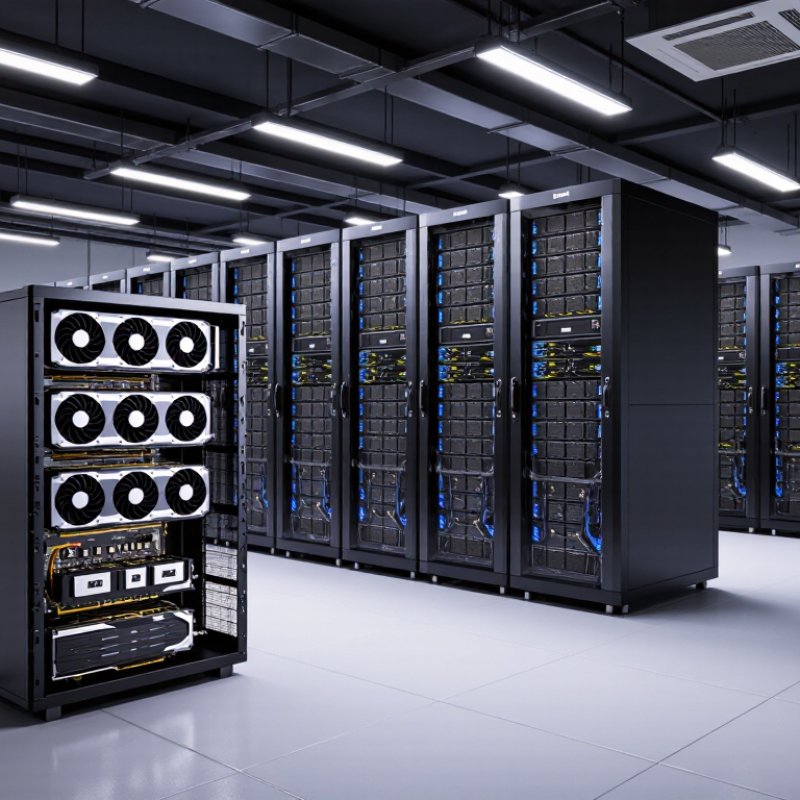
What Is an AI Computing Server Manufacturer?

Defining an AI Computing Server Manufacturer and Its Industry Role

An AI computing server manufacturer designs and builds systems for demanding artificial intelligence workloads. Its role extends beyond assembling processors, memory, storage, and networking cards. Engineers match hardware to model training, inference, simulation, and data processing requirements. They also plan airflow, power delivery, rack space, and service access. A well-designed server must sustain heavy workloads without frequent thermal throttling. That sounds simple. It is not.

The manufacturer’s industry role includes validation, integration, and technical support. Before shipment, teams may run stress tests, memory checks, firmware reviews, and extended burn-in cycles. These tests can reveal unstable components or cooling problems that ordinary office testing misses. Manufacturers also help organizations estimate power consumption and deployment costs. Clear documentation matters. A reliable supplier explains performance limits instead of promising unrealistic results. It should provide maintenance procedures, replacement guidance, and security-conscious configuration options.

However, the label can sometimes be misleading. Some companies mainly resell standard systems, while others engineer custom platforms. Buyers should examine test methods, warranty terms, response times, and long-term parts availability. Independent performance data is useful, but it needs context because workload results vary widely. No manufacturer gets every deployment right. Cooling design may need revision after installation, and software compatibility can expose overlooked weaknesses. That honest feedback loop separates a responsible AI computing server manufacturer from a simple equipment vendor.

Core Components: GPUs, CPUs, HBM, Storage, and 400-Gb/s Networking

What Is an AI Computing Server Manufacturer?

An AI computing server manufacturer designs and builds systems for demanding model training and inference. The core begins with GPUs, which process many calculations in parallel. CPUs coordinate operating systems, data preparation, and device communication. A balanced design matters. More GPUs alone may not improve real performance.

High-bandwidth memory, or HBM, keeps frequently used data close to the processor. This reduces delays during large matrix operations. Storage should match the workload, too. Fast solid-state storage helps load datasets and checkpoints quickly. Capacity still matters for long-term archives. A 400-Gb/s network connects servers with less congestion during distributed training. In practice, poor cable layouts or weak network tuning can waste expensive computing capacity. This is easy to underestimate.

Tips: Ask the manufacturer for measured throughput, power consumption, cooling details, and failure-recovery procedures. Check whether the server supports your software stack and future accelerator upgrades. Test a representative workload before purchasing. Small datasets can hide serious bottlenecks. Engineers should also inspect airflow, rack density, and maintenance access. One overlooked fan can affect an entire cluster. Performance claims deserve independent verification.

Manufacturing Stages: Design, Assembly, Testing, and Rack Integration

An AI computing server manufacturer does more than place powerful chips in a metal chassis. Its work begins with design, where engineers match processors, memory, storage, networking, and power demands. They model airflow and thermal loads before physical parts arrive. A useful design balances performance, serviceability, energy use, and future upgrades. It is difficult. Engineers also review safety requirements and documented quality controls for each market.

During assembly, technicians install boards, cooling modules, power supplies, and cables using controlled procedures. They check connector seating, torque values, firmware versions, and component serial records. Clear records matter. They support traceability when a failed unit returns for inspection. Testing then moves from basic power checks to demanding workload simulations. The team measures temperature, fan behavior, memory stability, network throughput, and sustained performance. Automated tests find repeatable faults, while experienced technicians investigate unusual noise or unstable readings. One imperfect assumption can survive a checklist.

Rack integration adds another practical layer. Workers mount servers, arrange power distribution, label cables, and verify airflow direction. They confirm rack weight, electrical capacity, grounding, and network connections before deployment. A complete integration test checks that multiple systems operate together without unexpected thermal or communication problems. In real facilities, crowded cable paths or dusty filters can change results. That is why commissioning should include site-specific measurements, not only factory data. Manufacturing quality depends on disciplined repetition, but it also improves through honest review of failures. Some designs need revision.

Performance Validation: TOP500’s 1.206-Exaflop Frontier Benchmark

What Is an AI Computing Server Manufacturer?

An AI computing server manufacturer builds systems for training and deploying large models. Its work includes processors, accelerators, memory, networking, cooling, and system software. Performance validation matters because impressive specifications can hide weak results under real workloads.

The November 2022 TOP500 list recorded Frontier at 1.206 exaflops on the HPL benchmark. Its measured peak reached approximately 1.679 exaflops. This result demonstrated exceptional double-precision computing, but HPL does not equal AI training speed. AI servers require additional tests for mixed-precision calculations, memory bandwidth, interconnect latency, and scaling efficiency. The Stanford AI Index Report 2024 noted that training costs and model sizes continue rising sharply. Energy use also deserves scrutiny. The International Energy Agency reported that data-centre electricity demand could more than double by 2026. A faster server is not automatically a better server.

Tips: Ask for audited benchmark results. Check performance per watt. Review results across eight, sixteen, and larger node clusters. Request failure-rate data and cooling assumptions. Small details matter.

A reliable manufacturer should connect benchmark claims with repeatable operating evidence. It should explain software versions, power limits, and test conditions clearly. That transparency reflects engineering maturity. Still, benchmark comparisons remain imperfect. Results can change with compiler tuning, workload selection, and data preparation. Buyers should treat 1.206 exaflops as a powerful reference point, not a universal prediction for every AI application.

Energy Standards: Uptime Institute’s 2023 Average PUE of 1.58

What Is an AI Computing Server Manufacturer?

An AI computing server manufacturer builds systems for demanding workloads such as model training, inference, and scientific simulation. Energy performance is now a design requirement, not a marketing detail. Uptime Institute reported an average Power Usage Effectiveness (PUE) of 1.58 in 2023. PUE compares total facility energy with energy used by computing equipment. A lower figure usually indicates less overhead from cooling, power conversion, and lighting.

For an AI server manufacturer, this benchmark creates practical pressure. High-density accelerators can generate intense heat inside a small rack. Efficient power supplies, balanced airflow, liquid cooling, and accurate thermal monitoring can reduce waste. However, hardware efficiency alone cannot guarantee a low PUE. Building age, climate, utilization, and maintenance also matter. A poorly tuned cooling system may erase gains from advanced components. That is an uncomfortable detail, but it deserves attention.

Tips: Measure PUE during real workloads, not only idle tests. Check rack temperatures at several heights. Review power readings monthly. Leave room for cooling upgrades. Perfect numbers are rare. A transparent manufacturer should share testing conditions, measurement methods, and limitations before making energy claims. Teams should also compare performance per watt, because a lower PUE does not automatically mean faster or more economical AI computing.

FAQS

What does an AI computing server manufacturer do?

It designs systems for model training, inference, simulation, and data processing. Components include accelerators, memory, storage, networking, cooling, and software.

Why is cooling important in AI servers?

Heavy workloads create sustained heat. Weak airflow can cause thermal throttling, slower performance, or unexpected shutdowns.

How does a manufacturer validate server reliability?

Teams may run stress tests, memory checks, firmware reviews, and extended burn-in cycles. Ordinary office testing is not enough.

What performance details should buyers request?

Ask for audited results, software versions, power limits, and test conditions. Check performance per watt, not speed alone.

Does a high benchmark score guarantee fast AI training?

No. One public benchmark recorded 1.206 exaflops, with a peak near 1.679 exaflops. AI training also depends on memory, precision, and networking.

Why should buyers test different cluster sizes?

Results can change across eight, sixteen, and larger node groups. Interconnect delays may reduce scaling efficiency.

What support should a responsible manufacturer provide?

It should explain maintenance steps, replacement guidance, warranty terms, and response times. Parts should remain available for a practical period.

Can a standard server meet every AI deployment need?

Not always. Rack space, power delivery, airflow, and software compatibility can expose hidden weaknesses after installation.

How can buyers identify misleading manufacturer claims?

Compare independent data with repeatable operating evidence. Request failure-rate information and cooling assumptions. Marketing numbers need context.

Is any AI server design completely reliable?

No design is flawless. Cooling may need revision, and overlooked software issues can appear later. Honest feedback improves the deployment.

Conclusion

An ai computing server manufacturer designs and produces specialized infrastructure for artificial intelligence, supporting applications such as model training, scientific research, and large-scale data analysis. Its role extends beyond hardware production to system engineering, thermal management, reliability planning, and integration of complete computing platforms. Core components typically include high-performance GPUs and CPUs, high-bandwidth memory (HBM), fast storage, and 400-Gb/s networking, enabling efficient data movement and accelerated parallel processing.

The manufacturing process generally covers architecture design, component assembly, firmware configuration, performance testing, and final rack integration. Validation focuses on computing speed, stability, scalability, network efficiency, and power consumption. A leading public supercomputing benchmark has demonstrated performance reaching 1.206 exaflops, illustrating the scale that advanced systems can achieve. Energy efficiency is equally important, with the 2023 industry-average Power Usage Effectiveness (PUE) reported at 1.58, encouraging manufacturers to improve cooling, power delivery, and overall data center sustainability.

Amelia

Amelia

Amelia is a seasoned marketing professional with a wealth of expertise in our company’s core offerings. With an unwavering passion for driving growth and innovation, she plays a pivotal role in shaping our marketing strategies and enhancing brand visibility. A key aspect of her responsibilities......