ZhiCloud AI
AI training servers have become critical infrastructure for organizations building large language models, vision systems, and scientific workloads. The hardware is demanding: accelerator density, memory bandwidth, high-speed networking, and cooling can shape performance as much as peak chip specifications. Small design choices matter. A crowded rack can become a thermal problem.
Gartner estimated that worldwide AI spending would reach $1.5 trillion in 2025, reflecting investment across hardware, software, and services. The International Energy Agency’s 2024 report projected that data-center electricity consumption could exceed 1,000 terawatt-hours by 2026. These figures do not measure server purchases alone, but they help explain why buyers scrutinize power efficiency, deployment capacity, and operating costs. Forecasts are not guarantees.
Choosing an ai training server manufacturer therefore requires more than comparing accelerator models. Buyers should examine validated system configurations, interconnect performance, cooling options, firmware support, warranty terms, and delivery capacity. Useful evidence includes published benchmarks and clear test conditions, not just headline throughput. Ask how a system performs under sustained training loads, when all accelerators are active and rack temperatures rise. Some claims remain hard to compare across vendors. That deserves scrutiny.
This guide examines leading manufacturers in 2026, including their platforms, strengths, and practical trade-offs. It also considers service coverage and integration needs, which can determine whether a powerful server becomes a dependable production system. No single vendor fits every workload. The best choice depends on data, budget, facilities, and expertise.
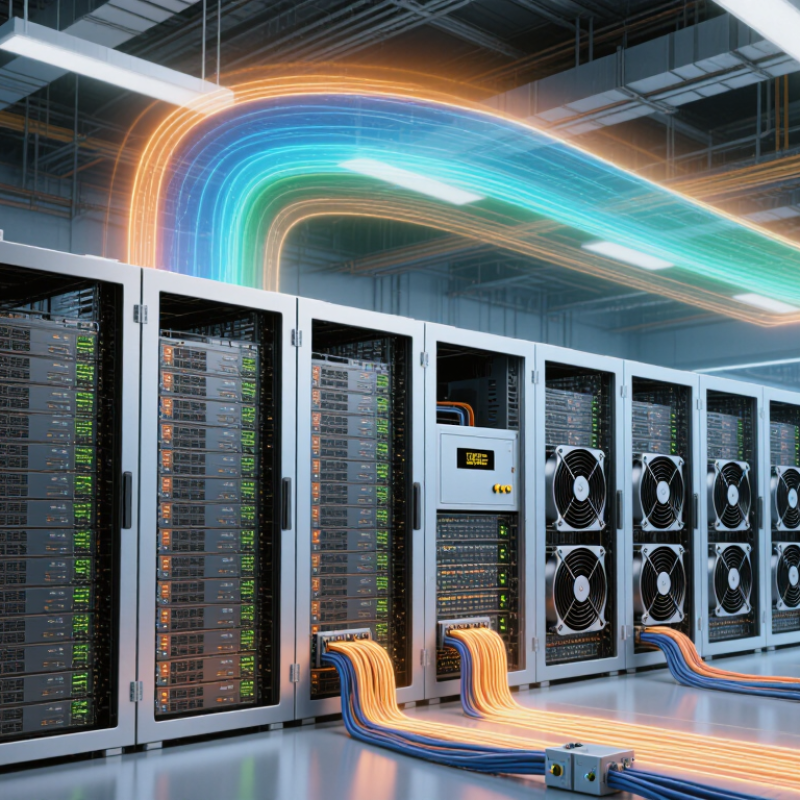
AI training servers are built to process enormous datasets and update complex models through repeated calculations. Their architecture combines accelerator cards, CPUs, high-bandwidth memory, fast storage, and low-latency networking. Accelerators handle parallel computation; CPUs coordinate data movement and system tasks. The result is a tightly connected machine, not simply a powerful processor in a box. Heat is real.
The International Energy Agency’s Energy and AI report estimates data centres used about 415 terawatt-hours of electricity in 2024, with demand potentially reaching 945 terawatt-hours by 2030. That growth makes power delivery and cooling central design concerns. Uptime Institute’s 2024 Global Data Center Survey also identifies power and cooling as ongoing operational challenges. In practice, liquid cooling may help manage dense accelerator racks, while redundant power supplies and network paths support stable training runs. More hardware is not always better; poorly balanced storage or networking can leave expensive processors waiting.
Tips: Check workload fit before choosing a server. For large models, compare accelerator memory capacity, interconnect bandwidth, and cooling limits—not just peak compute. Also test with real training data: benchmark results can look impressive, yet actual workloads may expose bottlenecks.
In 2026, evaluate AI server manufacturers on more than peak accelerator counts. Check sustained performance under the workloads you actually run, including model training, fine-tuning, and inference. Ask for measured power draw, cooling requirements, and performance per kilowatt. The International Energy Agency’s Energy and AI report estimates data centers used about 415 terawatt-hours of electricity in 2024, with demand potentially reaching 945 terawatt-hours by 2030. That makes energy efficiency a purchasing criterion, not a footnote. Thermals matter. Request test conditions, not just headline results.
Reliability needs evidence too. Examine component validation, firmware update practices, spare-part availability, and support response times in your region. Ask whether the manufacturer can share failure rates and repair targets, then verify them through customer references. Uptime Institute’s Global Data Center Survey offers useful context on operational challenges, but facility-wide findings cannot prove that a specific server design will suit your site. Make vendors demonstrate serviceability: Can a technician replace a power supply without disturbing neighboring systems? Supply-chain transparency, warranty terms, and clear upgrade paths also deserve scrutiny. No score is perfect. I would still compare systems using the same workload and measurement window; small test differences can distort the result.
Leading AI training server manufacturers tend to fall into three groups: established system builders, accelerator-focused specialists, and large-scale design manufacturers. Their profiles differ in integration, customization, and support.
System builders offer validated configurations, on-site service, and predictable deployment. Specialists may prioritize dense accelerator layouts and high-speed interconnects. Design manufacturers often tailor systems for large cloud operators.
Cooling matters. A server’s headline performance means little if its racks cannot handle the heat.
The Stanford Institute for Human-Centered AI’s 2025 AI Index reports that training compute for notable AI models has doubled roughly every five months. That pace rewards manufacturers able to connect many accelerators with fast networking and balanced memory bandwidth.
The International Energy Agency’s 2025 Energy and AI report estimates data centers used about 415 terawatt-hours of electricity in 2024, potentially nearing 945 terawatt-hours by 2030. Those figures cover data centers broadly, not AI training alone.
When comparing manufacturers, buyers should inspect measured throughput, power draw under sustained workloads, and service response times—not just peak specifications. Ask for thermal test conditions and the exact configuration behind performance claims.
Small details matter: cable routing, firmware updates, and replacement-part availability can affect uptime.
There is a catch. Published benchmarks rarely match every production workload, so pilot testing remains valuable. Procurement teams should also check whether facilities can supply adequate power and cooling before choosing a high-density design.
Choosing a training server in 2026 means comparing more than accelerator counts. Accelerator memory affects how much model data and batch work fit at once. Interconnect bandwidth matters when several accelerators share a workload. Ask for results using workloads close to yours, not just a peak-performance figure. That matters.
The full system can change the outcome. Check cooling capacity, power draw, storage throughput, and whether the network can move data quickly enough. A dense server may save rack space but require more careful airflow planning. Review how the system handles maintenance, upgrades, and component failures. I would still validate vendor benchmarks independently; test conditions can differ from everyday training jobs.
Tips: Request a small-scale workload test before committing. Record training speed, power use, and time spent troubleshooting. Ask support teams about response hours, replacement parts, and escalation paths. Get answers in writing. Strong support is practical: clear diagnostics, useful documentation, and engineers who understand distributed training. Some details are easy to overlook, and support quality can vary by region or workload.
AI training servers are shifting from raw accelerator counts toward balanced, rack-scale systems. IDC projected global spending on AI-centric systems would exceed $300 billion by 2026. That category includes more than servers, but it signals sustained pressure on compute infrastructure. Buyers increasingly assess memory bandwidth, network throughput, and power delivery together. A fast chip is not enough.
Electricity is becoming a design constraint. The International Energy Agency’s Electricity 2024 report estimated data centers used about 460 terawatt-hours in 2022, with demand potentially exceeding 1,000 terawatt-hours by 2026. For server developers, this means denser racks must also manage heat and energy use. Liquid cooling is gaining attention, while facility power availability can still limit deployment. The details matter.
Training workloads also favor flexible systems. Operators need to scale clusters, replace components, and keep communication delays low. Yet liquid cooling adds maintenance demands, and higher density can complicate repairs. Not every facility is ready. These trade-offs are easy to understate. Forecasts describe investment, not guaranteed deployments, and regional power limits may reshape purchasing plans. The direction is clear, but implementation remains uneven.
It processes large datasets and updates models through repeated calculations. Accelerators handle parallel work. Heat is real.
Key parts include accelerators, CPUs, high-bandwidth memory, fast storage, and low-latency networking. They must work together.
A fast processor can sit idle if storage or networking cannot keep up. Test with real training data, not only headline benchmarks.
Request measured power draw and performance per kilowatt under similar workloads. Results can change with different test conditions.
Liquid cooling may help remove heat from tightly packed equipment. It also adds maintenance needs. Not every facility is ready.
Ask about component testing, firmware updates, spare parts, repair targets, and regional support response times. Verify claims with customer references.
Low-latency connections help servers exchange data across a cluster. Weak communication paths can slow the entire workload.
Not necessarily. Higher density may complicate cooling, power delivery, and repairs. The trade-offs are easy to underestimate.
Compare systems using the same workload and measurement window. Check power and cooling limits first. I may be overvaluing neat test results.
AI training servers are purpose-built systems designed to process large datasets and train complex machine-learning models efficiently. Their architecture brings together high-performance accelerators, CPUs, memory, storage, and fast interconnects, with cooling and power delivery engineered to support sustained workloads. Choosing an ai training server manufacturer in 2026 involves evaluating more than peak performance: buyers should also consider system reliability, scalability, energy efficiency, compatibility, security practices, and the quality of technical support.
Leading manufacturers differ in how they combine accelerators into complete systems, manage thermal demands, and support deployment across different data-center environments. Comparing these capabilities helps organizations match server configurations to model size, workload, budget, and growth plans. Meanwhile, advances in accelerator design, rising demand for compute, and greater attention to operating costs are shaping product development. The strongest solutions balance training speed with dependable service, efficient resource use, and the flexibility to adapt as AI workloads evolve.
