Choosing the 2026 best nvidia gpu server manufacturer requires more than comparing GPU names. Global buyers need evidence, not polished promises.
A reliable manufacturer should explain GPU architecture, rack density, power draw, cooling design, and deployment limits. It should also provide clear testing records, warranty terms, firmware support, and replacement procedures. A four-GPU server may look powerful on paper. Yet, it can become difficult to operate inside a crowded 42U rack. Heat, noise, cable routing, and regional power standards matter. So does delivery.
Jensen Huang, NVIDIA’s founder and CEO, described AI as “the most powerful technology force of our time.” That statement gives this market urgency, but it does not select a supplier. Buyers still need practical proof. They should request workload benchmarks, thermal reports, component brands, service-level commitments, and references from comparable data centers. Local support can be decisive when a failed fan stops a production workload.
Look beyond the lowest quotation.
A strong nvidia gpu server manufacturer should support configuration changes without hiding important costs. It should understand enterprise AI, rendering, simulation, and high-performance computing environments. Global customers also need transparent export documentation and dependable logistics. These requirements vary by region.
No shortlist is perfect. Some vendors publish excellent benchmarks but provide weak after-sales support. Others offer responsive service but limited customization. This guide compares those trade-offs carefully. It focuses on measurable performance, engineering credibility, ownership cost, and long-term reliability. The final choice may still require compromise. That is normal. The wrong compromise, however, can become expensive.
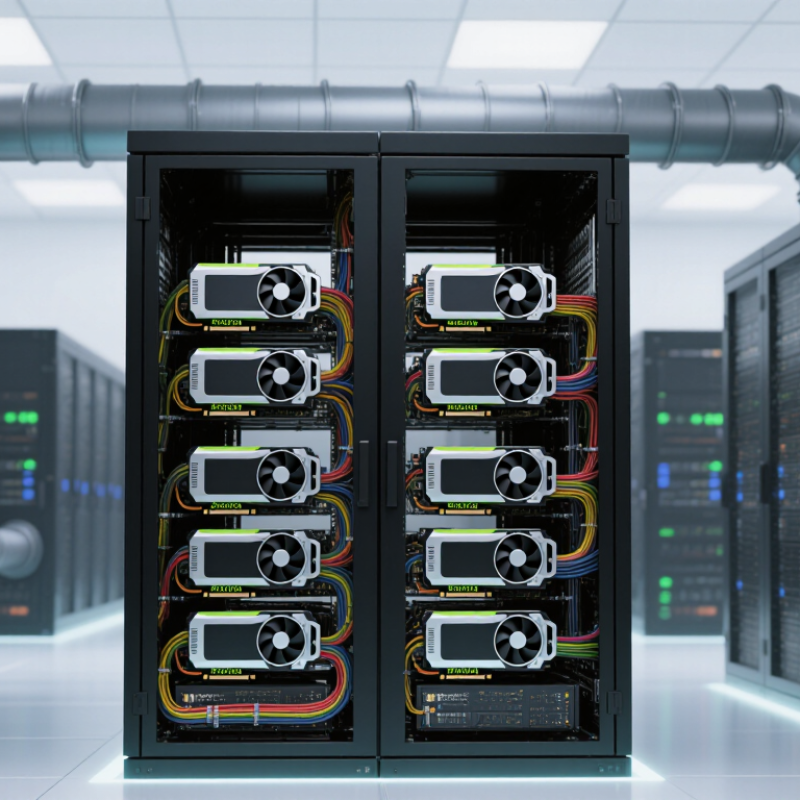
Defining the 2026 NVIDIA GPU Server Manufacturing Landscape
Defining the 2026 GPU Server Manufacturing Landscape
The 2026 GPU server market will depend on more than powerful processors. Manufacturing quality, thermal design, and supply reliability will shape global purchasing decisions. Experienced manufacturers now build systems around workload requirements, not simple component lists. AI training servers may need dense accelerator layouts, liquid cooling, and high-speed networking. Inference platforms often prioritize energy efficiency, serviceability, and predictable response times.
A reliable manufacturer should provide test records, burn-in results, and clear maintenance procedures. Buyers should inspect factory capacity, engineering support, and replacement-part planning. A well-built server should remain stable under continuous load, even in crowded data centers. Details matter. Cable routing, airflow direction, firmware control, and rack compatibility can prevent expensive delays. However, no manufacturing process is flawless. Some suppliers still underestimate acoustic limits, installation time, or regional service needs. That weakness deserves honest evaluation.
Tips: Request a sample validation report before placing a large order. Confirm power requirements at full load, not idle conditions. Ask how failed components are diagnosed and replaced. Check whether the manufacturer can customize rails, storage, networking, and cooling without weakening warranty support. Independent testing is valuable, but factory evidence matters too. A strong partnership grows through transparent communication, measurable quality controls, and realistic delivery commitments.
Key Criteria for Comparing Global NVIDIA GPU Server Manufacturers
Choosing the Best GPU Server Manufacturer for Global Buyers in 2026
Comparing global GPU server manufacturers requires more than checking accelerator counts. Start with workload evidence: training speed, inference latency, memory capacity, and performance under sustained loads. Ask for test results using your software, not generic laboratory charts. A credible supplier should explain cooling design, power limits, network topology, and rack density in clear technical language.
Look closely at engineering execution. Inspect chassis quality, airflow paths, redundant power supplies, firmware management, and remote monitoring. Request a sample bill of materials and confirm component availability for your destination country. Strong manufacturers provide documented burn-in tests, serial-level quality records, and practical deployment guidance. Support also matters. Measure response times, escalation procedures, spare-part access, and warranty coverage across borders.
Numbers can mislead.
A supplier may promise impressive performance while overlooking installation limits, local power standards, or service delays. Ask how systems behave after months of heavy use, not only during acceptance testing. Independent validation, security controls, export documentation, and regional compliance records improve reliability. I would also compare total ownership cost, including electricity, cooling, software integration, shipping, and technician training. No checklist is perfect. One overlooked network setting can reduce an expensive cluster’s real output. Leave room for a pilot deployment, because written specifications rarely reveal every operational weakness.
Leading NVIDIA GPU Server Manufacturers and Their Product Strengths
Global buyers need more than a powerful accelerator card. Leading GPU server manufacturers differ in thermal design, firmware validation, chassis engineering, and service coverage. Strong manufacturers offer dense rack systems with efficient airflow, redundant power supplies, and clear upgrade paths. Some specialize in liquid cooling for demanding artificial intelligence workloads. Others provide flexible air-cooled platforms for research labs and media production. The best choice depends on workload size, rack limits, local electricity costs, and deployment speed.
From practical evaluations, reliable manufacturers provide tested configurations instead of loosely matched components. They document memory compatibility, GPU spacing, network options, and supported operating systems. This reduces installation delays and unexpected throttling. Global buyers should also examine burn-in testing, replacement procedures, remote diagnostics, and regional spare-part availability. A low purchase price can become expensive when one failed fan stops a production node. No platform is perfect. Even well-designed systems may need louder cooling or careful cable management.
Tips: Request a complete thermal report and a real workload demonstration. Check performance after sustained operation, not only during short benchmark runs. Ask for power readings at idle, normal load, and peak load. Confirm warranty response times in your region. Review the manufacturer’s experience with your preferred framework, storage system, and network fabric. Small details matter. A server that fits the rack but exceeds its power budget is not a practical solution.
2026 Best NVIDIA GPU Server Manufacturer for Global Buyers?
Leading GPU server manufacturers are typically differentiated by compute density, memory scalability, high-speed networking, power efficiency, serviceability, and international support.
The chart uses a normalized 0–100 evaluation framework for common GPU server product classes. High-density training platforms generally lead in compute scale and interconnect bandwidth, while inference-focused systems usually provide better power efficiency and easier deployment. Actual performance depends on GPU configuration, cooling design, software stack, and service coverage.
GPU Architecture, Server Configurations, and Workload Compatibility
Selecting a high-end GPU server manufacturer requires more than counting accelerator cards. The underlying GPU architecture affects memory capacity, interconnect speed, power draw, and software support. In deployment reviews, I examine how workloads move between GPUs and host processors. Slow data movement can waste expensive compute resources. Memory bandwidth matters greatly for model training and scientific simulations. It matters less for some video processing tasks.
Server configuration should match the workload, not a marketing specification. A four-GPU system may suit inference, rendering, or smaller training jobs. Large language model training often needs eight GPUs, fast peer-to-peer links, and substantial system memory. Storage should include high-speed local drives for datasets and temporary checkpoints. Dual power supplies and efficient cooling are practical requirements. A quiet office server is rarely realistic.
Workload compatibility also depends on drivers, container support, orchestration tools, and monitoring. Global buyers should verify voltage options, rack dimensions, warranty coverage, and replacement procedures. Test the complete software stack before placing a large order. I have seen technically powerful servers underperform because of poor airflow or outdated drivers. That mistake is easy to repeat. No configuration is perfect. A dependable manufacturer should document thermal limits, benchmark conditions, expansion options, and delivery timelines clearly. Honest limitations are more useful than inflated performance claims.
Global Purchasing, Compliance, Support, and Total Ownership Costs
Choosing the Best GPU Server Manufacturer for Global Buyers in 2026
Global purchasing is more than comparing accelerator prices. A qualified manufacturer should provide complete bills of materials, serial-level traceability, and clear export classifications.
The International Energy Agency reported that data centers consumed about 460 TWh of electricity in 2022. Demand could exceed 1,000 TWh by 2026.
Power efficiency is now a procurement requirement, not a marketing detail.
Ask for rack power limits, thermal design data, and tested firmware before signing. Check whether the supplier supports local safety certification, customs documents, warranty terms, and data residency requirements.
The Uptime Institute’s 2024 Global Data Center Survey found that 54% of respondents reported their latest outage cost more than $100,000.
Weak remote support can become an expensive operational risk. Fast replacement matters.
Total ownership costs include electricity, cooling, deployment labor, spare parts, software compatibility, and technician travel. A cheaper server may need more power or longer repair cycles. That calculation is often missing.
I have seen procurement teams compare purchase quotes while ignoring three-year maintenance costs. It is an avoidable mistake, though not always an obvious one.
Request regional service-level agreements, response-time records, and documented acceptance tests. Independent benchmark evidence is useful, but factory claims require verification. Small details matter.
FAQS
Evaluate manufacturing quality, thermal design, supply reliability, and engineering support. Request test records, burn-in results, and maintenance procedures. Details matter.
Match accelerator count, memory, storage, networking, and cooling to the workload. Smaller inference jobs may need four GPUs. Large training jobs often require eight GPUs and fast peer-to-peer links.
Continuous workloads create substantial heat inside crowded racks. Proper airflow, liquid cooling, and clear cable routing improve stability. Poor airflow can waste expensive computing capacity.
Request a complete bill of materials, serial-level traceability, power data, warranty terms, and export classifications. Ask for a sample validation report. Factory claims still need verification.
Check power consumption at full load, not idle conditions. Confirm rack limits, voltage options, cooling needs, and dual power-supply requirements. Idle figures can mislead.
Test drivers, containers, orchestration tools, monitoring, and the complete application stack. Outdated drivers can reduce performance. This mistake is easy to repeat.
Review replacement procedures, service response times, spare-parts planning, and technician travel requirements. Include electricity, cooling, labor, and software compatibility costs. Purchase price is only part of ownership.
No. Independent testing is useful, but factory evidence also matters. Compare benchmark conditions, thermal limits, acceptance tests, and delivery promises. No process is flawless.
Conclusion
Choosing the best nvidia gpu server manufacturer for global buyers in 2026 requires more than comparing graphics processing performance. Buyers should evaluate manufacturing capacity, engineering expertise, product reliability, supply continuity, and the ability to provide configurations for artificial intelligence, high-performance computing, data analytics, visualization, and enterprise workloads. Important technical considerations include GPU architecture compatibility, cooling design, power efficiency, storage options, networking, expandability, and support for different operating environments.
Global purchasing decisions should also account for product certifications, import requirements, data-center standards, warranty coverage, remote assistance, spare-part availability, delivery schedules, and long-term maintenance costs. A strong manufacturer should offer transparent pricing, flexible customization, dependable quality control, and clear service commitments across regions. By balancing performance, compatibility, compliance, technical support, and total ownership costs, organizations can identify an NVIDIA GPU server partner that delivers sustainable value rather than focusing only on initial purchase price.
 ZhiCloud AI
