ZhiCloud AI
Choosing the 2026 best data center AI server manufacturer requires more than comparing GPU counts or glossy performance claims. Buyers must examine cooling design, rack density, networking, firmware support, supply resilience, and measured energy use. A server may look powerful on paper, yet perform poorly when heat limits reduce sustained workloads.
Industry spending shows why this market deserves careful scrutiny. Gartner forecasts worldwide artificial intelligence spending will reach approximately $1.5 trillion in 2025, with infrastructure representing a major share. IDC’s Worldwide AI and Generative AI Spending Guide projects global AI spending will exceed $630 billion by 2028. These figures suggest strong demand, but they do not guarantee equal quality among vendors. Deployment evidence still matters.
Jensen Huang, NVIDIA’s founder and chief executive, said, “The next wave of AI is physical AI.” His statement reflects a practical shift toward systems that connect models, machines, sensors, and real-world operations. For a data center AI server manufacturer, that shift raises demanding questions about reliability, latency, serviceability, and power consumption. The best providers will not simply sell accelerators. They will deliver validated platforms, transparent benchmarks, lifecycle support, and realistic deployment guidance.
This comparison will examine major manufacturers through those criteria. It will consider independent research, enterprise experience, and technical specifications. Some rankings may remain debatable. That is unavoidable. Vendor claims can also change quickly. Readers should verify current configurations, regional support, warranties, and total operating costs before making a final decision.
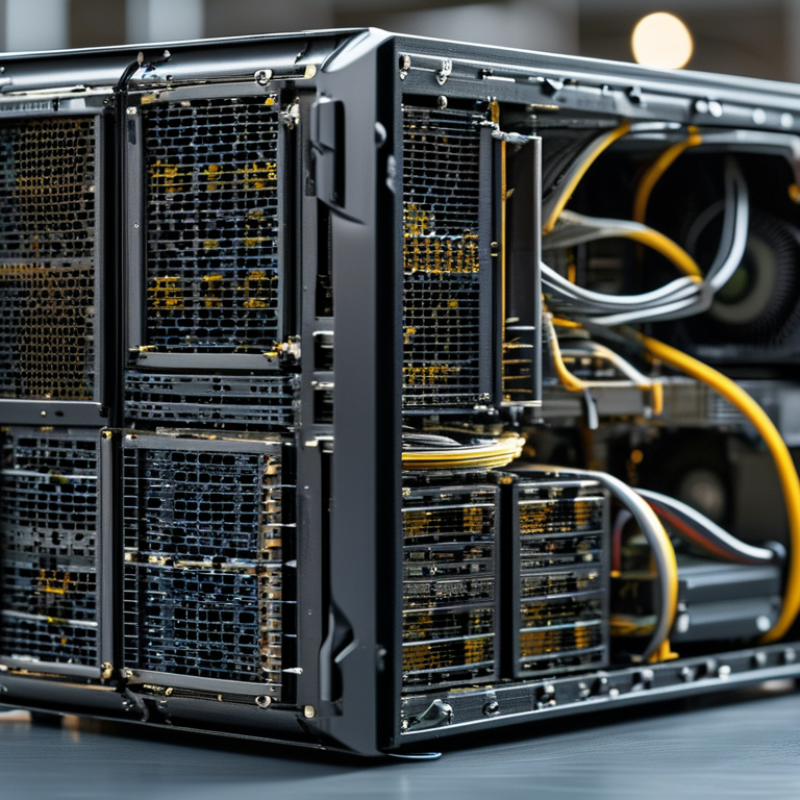
A data center AI server manufacturer in 2026 must build more than fast computing hardware. It must engineer a complete, validated platform for sustained AI workloads. That includes accelerators, high-speed networking, memory, storage, power delivery, cooling, firmware, and remote management. Field testing matters. A server that performs well for ten minutes may fail under weeks of continuous training.
Energy efficiency is now a manufacturing requirement, not a marketing phrase. The International Energy Agency reported that data centers consumed about 460 TWh globally in 2022. It expects demand could exceed 1,000 TWh by 2026. Manufacturers therefore need to publish performance-per-watt data, thermal limits, and workload testing methods.
Liquid cooling may improve density, but it also creates maintenance risks. Sometimes, the “best” design is not the most powerful one.
Reliability also depends on evidence. The Uptime Institute’s industry surveys repeatedly identify power, cooling, and staffing as major operational concerns. A credible manufacturer should provide failure-rate data, spare-parts planning, security updates, and clear service-level commitments.
IDC’s worldwide infrastructure research shows that AI investment is expanding rapidly, yet procurement teams still face uncertain workloads. This changes the definition of quality. Flexible configurations, transparent validation, and repairable systems may matter more than peak benchmark scores.
Some specifications remain difficult to compare. That is where buyers must question the methodology.
2026 Best Data Center AI Server Manufacturers?
Core Technologies Used in Modern AI Server Platforms
Modern AI server platforms depend on more than powerful processors. They combine accelerators, high-bandwidth memory, and fast interconnects for parallel model training. A single server may coordinate several accelerator cards through PCIe or a dedicated fabric. The fabric matters. Slow communication can leave expensive hardware waiting.
Thermal design is equally important. High-density racks generate intense heat near accelerator modules. Direct-to-chip liquid cooling can remove heat more efficiently than traditional air systems. However, it adds pumps, sensors, and maintenance requirements. In deployment reviews, airflow planning often proves as important as processor selection. Small temperature differences can affect sustained performance.
Reliable platforms also require software-aware hardware. Container orchestration, distributed training libraries, and telemetry tools help operators manage workloads. Remote direct memory access can reduce communication overhead across servers. Secure boot, firmware validation, and isolated management networks strengthen system trust. Redundant power supplies and error-correcting memory reduce avoidable interruptions.
Benchmark results can mislead. A server may perform well in short tests but slow down during a twelve-hour training run. I have seen cooling limits change the outcome. Power efficiency, service access, and recovery time deserve equal attention. The best platform is not always the fastest one. It is the system that delivers stable performance under real operating conditions.
Technology comparison framework for evaluating modern AI server platforms without ranking individual companies or brands
| Technology Dimension | Modern Implementation | Typical Technical Data | AI Workloads Supported | Evaluation Considerations |
|---|---|---|---|---|
| Accelerator Architecture | GPU, tensor accelerator, or heterogeneous accelerator nodes with dedicated matrix-compute units | Low-precision formats commonly include FP8, BF16, FP16, INT8, and INT4; supported formats vary by processor generation | Large-language-model training, inference, recommendation, computer vision, and scientific simulation | Compare sustained throughput, memory capacity, software support, and performance per watt rather than peak operations alone |
| High-Bandwidth Memory | On-package stacked memory connected to the accelerator through a very wide interface | HBM3 provides up to approximately 819 GB/s per stack; HBM3E can reach approximately 1.2 TB/s per stack, depending on implementation | Memory-bandwidth-intensive inference, transformer training, graph analytics, and scientific workloads | Check total accelerator memory, memory bandwidth, error correction, thermal limits, and upgradeability |
| Scale-Up Interconnect | Dedicated accelerator-to-accelerator fabric using high-speed links and switching within a server or rack | Aggregate bandwidth may reach multiple terabytes per second in tightly coupled multi-accelerator systems; exact values depend on topology | Distributed training, mixture-of-experts models, parameter exchange, and model parallelism | Evaluate topology, bisection bandwidth, latency, link redundancy, and whether all accelerators have uniform access |
| Host Processor and System Memory | Multi-socket or single-socket server CPUs with DDR5 or next-generation memory and high PCIe lane counts | DDR5 server memory commonly operates at 4,800–6,400 MT/s; practical capacity ranges from hundreds of gigabytes to several terabytes per node | Data preprocessing, orchestration, CPU inference, database services, and accelerator feeding | Check memory channels, NUMA layout, PCIe locality, CPU-to-accelerator affinity, and maximum supported capacity |
| PCI Express Expansion | PCIe Gen5 or Gen6 connections for accelerators, network adapters, storage controllers, and smart infrastructure devices | PCIe 5.0 x16 provides approximately 63 GB/s bidirectional bandwidth; PCIe 6.0 x16 provides approximately 126 GB/s bidirectional bandwidth | Accelerator attachment, high-speed networking, direct storage access, and composable infrastructure | Confirm slot width, lane allocation, bifurcation support, retimer usage, and bandwidth sharing between devices |
| Scale-Out Networking | High-speed Ethernet or InfiniBand-class fabric with RDMA, congestion control, and loss-minimizing transport | 400 Gb/s and 800 Gb/s network links are used in current high-performance clusters; effective application bandwidth is lower than line rate | Cluster training, distributed inference, parameter synchronization, and remote direct memory access | Assess oversubscription, port count, fabric topology, RDMA support, latency, telemetry, and interoperability |
| Local Storage | NVMe solid-state storage using PCIe Gen4, Gen5, or newer interfaces, commonly configured with redundant data paths | Enterprise NVMe drives commonly deliver millions of IOPS and several GB/s of sequential throughput, depending on capacity and workload | Dataset staging, checkpointing, feature stores, vector databases, and high-throughput inference | Review sustained write performance, endurance rating, power-loss protection, hot-swap capability, and software-defined storage support |
| Cooling System | Hybrid air and liquid cooling, including direct-to-chip cold plates for high-density accelerator nodes | High-density AI racks can exceed 30 kW and may approach or surpass 100 kW per rack in specialized deployments | Continuous training, dense inference, and large multi-node accelerator clusters | Validate facility water quality, coolant distribution, leak detection, serviceability, rack-level heat rejection, and PUE impact |
| Power Delivery | High-efficiency power supplies, busbars, intelligent power shelves, and dynamic power capping | 80 PLUS Titanium power supplies can achieve up to 96% efficiency at defined load points; actual efficiency varies by load and input voltage | Power-constrained data centers, high-utilization training clusters, and inference fleets | Compare peak and typical consumption, transient response, redundancy mode, power telemetry, and facility distribution requirements |
| AI Software Stack | Linux-based operating systems, container runtimes, accelerated libraries, compilers, schedulers, and model-serving frameworks | Common standards include OCI containers, Kubernetes, OpenMP, MPI, collective communication libraries, ONNX, and MLIR-based toolchains | Training, fine-tuning, inference, batch analytics, and multi-tenant AI services | Check framework compatibility, driver stability, container support, compiler maturity, observability, and long-term software maintenance |
| Security and Confidential Computing | Secure boot, hardware root of trust, firmware signing, memory encryption, device identity, and confidential virtual machines | Security capabilities are implemented at firmware, CPU, accelerator, hypervisor, and orchestration layers | Regulated AI, multi-tenant inference, private model serving, and sensitive-data processing | Verify attestation workflow, key management, firmware update process, isolation guarantees, and compliance evidence |
| Manageability and Reliability | Out-of-band management, Redfish APIs, telemetry, predictive failure analysis, remote firmware updates, and redundant components | Typical enterprise designs include ECC memory, hot-swappable drives, redundant power supplies, and automated hardware monitoring | 24/7 production inference, large-scale training, hosted AI platforms, and mission-critical analytics | Measure mean time to repair, component replacement workflow, API coverage, diagnostics quality, spare-part availability, and service-level support |
In 2026, leading AI server manufacturers will compete through engineering depth, not headline specifications. The strongest suppliers design complete rack systems, including accelerators, high-speed networking, power delivery, and thermal controls. Their platforms can support dense training clusters without turning every server room into a heat problem.
Liquid cooling is becoming a practical requirement, especially for racks exceeding 80 kilowatts. That figure changes facility planning quickly.
Manufacturing consistency is another critical strength. Experienced suppliers validate motherboards, firmware, memory, and accelerator compatibility before shipment. They also provide burn-in testing, failure analysis, and replaceable modules for faster maintenance.
A useful evaluation includes service response times, spare-parts locations, and field engineer coverage. Technical documentation matters too. Clear diagrams can save hours during a midnight repair.
Different manufacturers will excel in different areas. Some focus on flexible configurations for research teams. Others specialize in standardized systems for large cloud environments. Security-focused suppliers may provide stronger firmware controls, supply-chain records, and audit support.
The best choice depends on workload, facility capacity, and operating skill. No supplier is perfect. A powerful rack may still fail if cooling upgrades arrive late.
I have seen impressive specifications hide ordinary integration problems. Buyers should test a complete pilot cluster, measure power under sustained workloads, and question every promised service level. That effort feels slow, but rushed selection is often more expensive.
Choosing an AI server manufacturer requires more than comparing accelerator counts. Start with measurable workload performance, memory capacity, interconnect bandwidth, and performance per watt. MLCommons’ MLPerf Training results show that training speed varies significantly with software tuning and system design. Request results for your actual models, not only headline benchmark scores.
Power and cooling deserve equal attention. The International Energy Agency reported that data centers used about 460 terawatt-hours of electricity in 2022. It expects demand could exceed 1,000 terawatt-hours by 2026. Compare rack-level power limits, liquid-cooling options, acoustic controls, and sustained performance under heat. A server that peaks impressively may throttle during a long training run. That difference affects operating budgets.
Reliability must be tested in practical conditions. Uptime Institute’s 2024 Global Data Center Survey found that serious outages remain expensive, with many incidents exceeding 100,000 dollars. Review failure rates, spare-part availability, firmware practices, remote diagnostics, and replacement timelines. Check support coverage across regions and contract terms. Security features also matter, including secure boot, component tracking, and controlled administrative access. No scorecard is perfect. My own evaluations would assign extra weight to serviceability, because a five-minute repair can matter more than a small benchmark lead. Ask for deployment references, power measurements, and documented results from comparable workloads.
2026 Best Data Center AI Server Manufacturers?
Selecting the Best AI Server Manufacturer for Different Workloads
Choosing an AI server manufacturer starts with the workload, not the product brochure. Large model training needs dense accelerators, fast interconnects, high memory bandwidth, and dependable liquid cooling. Inference deployments usually prioritize latency, power efficiency, compact designs, and predictable scaling. Inference is different. A manufacturer experienced in training clusters may not optimize edge inference systems well.
For analytics and scientific computing, examine processor balance, storage throughput, virtualization support, and network flexibility. Ask for workload-specific benchmark results using your models, batch sizes, and data pipelines. Generic scores can hide serious limitations. During evaluation, inspect rack density, acoustic output, thermal controls, firmware management, and replacement procedures. Small details matter. A server that overheats during a six-hour test may become expensive in production.
Reliable selection also requires evidence beyond specifications. Review warranty terms, validation records, security update practices, spare-part availability, and technical response times. Request a pilot with realistic datasets and measure performance per watt, not speed alone. In my experience, integration labor is often underestimated, especially when cooling, networking, and orchestration tools come from different suppliers. That assumption deserves challenge. The lowest purchase price may create higher operational costs. Even strong manufacturers can miss a fit when requirements are vague, benchmarks are too short, or future expansion is ignored.
It should deliver a complete platform, not isolated hardware. This includes accelerators, networking, memory, storage, cooling, firmware, and remote management. Field testing matters. Short demonstrations can hide failures during weeks of training.
AI servers can consume substantial electricity during continuous workloads. Manufacturers should publish performance-per-watt results and testing conditions. Buyers should compare power limits, heat output, and sustained performance. Peak speed alone can mislead.
Liquid cooling helps dense racks manage intense heat. It becomes especially relevant above roughly 80 kilowatts per rack. However, pumps, leaks, and maintenance add operational risks. More cooling is not always better.
Compare actual model performance, memory capacity, interconnect speed, power use, and maintenance needs. Request results from workloads resembling your own. Headline benchmark numbers are incomplete. Test a small pilot cluster before making a large purchase.
Ask for failure-rate data, burn-in procedures, spare-parts planning, and repair timelines. Review firmware updates and remote diagnostic capabilities. A clear diagram can shorten a difficult midnight repair. Evidence matters more than confident language.
High temperatures can force a server to reduce speed during long training runs. Facility power limits may also restrict rack density. Measure electricity use under sustained workloads. A ten-minute test is not enough.
Useful features include secure boot, component tracking, controlled administrator access, and documented firmware practices. Supply-chain records can support audits. Security settings should be manageable remotely. Perfect protection is unlikely.
Serviceability can matter more than a small benchmark advantage. Check regional support, engineer coverage, spare-part locations, and replacement commitments. Replaceable modules can reduce downtime. I would give service extra weight, though my scoring may still be imperfect.
In 2026, a leading data center ai server manufacturer is defined by more than high-performance hardware. It must deliver scalable platforms that combine advanced accelerators, high-speed networking, efficient storage, reliable power and cooling systems, and intelligent management software. Modern AI server platforms are designed to support demanding workloads such as model training, inference, analytics, and scientific computing while maintaining strong security, availability, energy efficiency, and long-term serviceability.
This overview explains how to evaluate AI server manufacturers by comparing processing capacity, memory architecture, interconnect technology, system flexibility, software compatibility, deployment options, and total operating cost. It also highlights how different manufacturers may serve different priorities, from intensive training and large-scale inference to edge-supported operations, enterprise applications, and research environments. The best choice depends on workload requirements, expansion plans, data center infrastructure, budget, support expectations, and sustainability goals.
